
Custom home construction in Lake Forest is a thrilling opportunity. You get to design a residence that fits your lifestyle, your taste, and your future. But before walls can rise and finishes can shine, every detail of your home must pass through one critical filter: Lake Forest’s building codes and zoning regulations.
These aren’t just bureaucratic hurdles. They are the standards that protect safety, preserve the beauty of Lake Forest’s neighborhoods, and maintain property values across the community. However, the challenge is that the construction is extensive, detailed, and strictly enforced. For homeowners investing millions into a dream property, a misstep on permits or zoning isn’t just inconvenient; it can be financially devastating.
With a clear understanding of these rules and the support of an experienced design-build partner, building in Lake Forest becomes a smooth, efficient, and well-managed process.
Why Do Codes Matter More in Lake Forest Constructions?
Unlike some municipalities that take a lighter hand, Lake Forest has built a reputation for thorough reviews. The city enforces the 2018 International Residential Code (IRC) for one- and two-family homes and the International Building Code (IBC) for larger or mixed-use projects. On top of these, the city layers its own amendments through Chapter 150 of the Municipal Code.
Every project must also meet Chapter 159: Zoning rules, which regulate lot coverage, setbacks, height limits, and use restrictions. Even if your drawings pass building code, they can still be denied on zoning grounds, or for conflicting with Lake Forest’s Residential Design Guidelines, which safeguard architectural character.
So, passing “code” is not enough in Lake Forest. Homes must also respect zoning envelopes and fit the neighborhood’s design expectations.
What Happens If You Ignore the Rules?
Cutting corners on codes in Lake Forest can backfire quickly.
- Stop-Work Orders: Inspectors can halt construction until issues are corrected.
- Fines & Fees: Unpermitted or noncompliant work can trigger steep penalties.
- Insurance Denials: If damage occurs, insurers may refuse claims tied to code violations.
- Resale Red Flags: Unapproved additions or remodels can derail sales and lower appraisals.
- Legal Liability: Building outside of zoning allowances can expose owners to lawsuits or forced removal of structures.
What feels like “saving time” up front usually ends in higher costs, delays, and headaches.
Major Zoning Rules Homeowners Must Abide by in Lake Forest
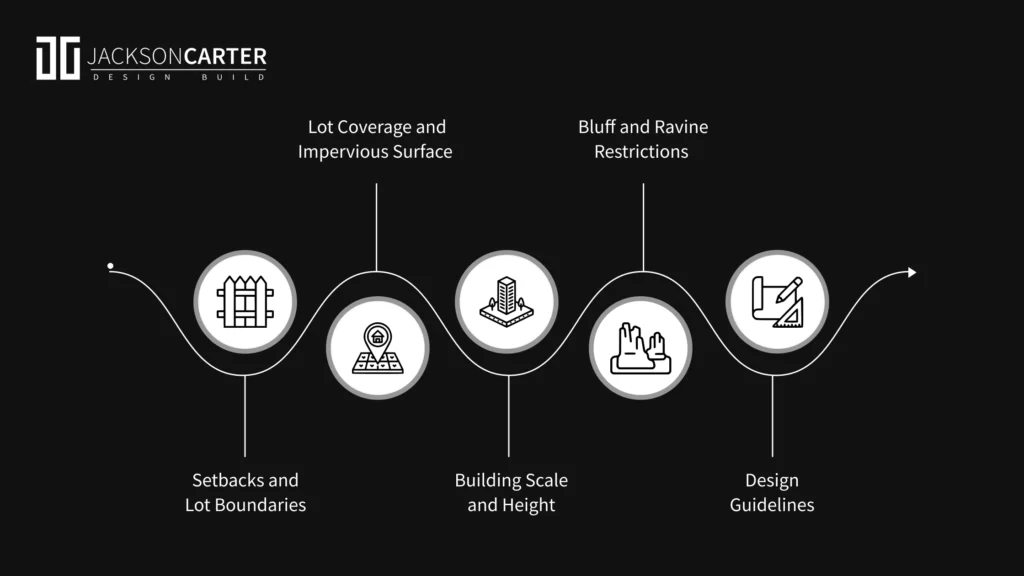
Zoning is often the biggest surprise for homeowners because it dictates how much of their lot can actually be built on. Here’s how it plays out in Lake Forest:
Setbacks and Lot Boundaries
In R-1 districts, side yard setbacks can be as deep as 40 feet. That means a 100-foot-wide lot may only allow 20 feet of buildable width once both sides are subtracted. Homeowners often design floor plans too large for their zoning envelope, only to be forced into expensive redesigns later.
Lot Coverage and Impervious Surface
Lake Forest places strict limits on how much of your land can be covered by buildings and hardscape. Exceeding these limits often requires costly stormwater management systems, sometimes in the tens of thousands.
Building Scale and Height
Per §150.148 of the Municipal Code, the maximum square footage of a new home is tied to lot size. Roof height and slope are also regulated to maintain a consistent neighborhood scale.
Bluff and Ravine Restrictions
Properties in Lake Forest located along Lake Michigan or near ravines fall under special zoning overlays. These areas require stricter standards for foundations, erosion control, drainage, and slope stability. The intent is to protect both homeowners’ investments and the long-term health of Lake Michigan’s shoreline environment.
Design Guidelines
Even a technically code-compliant home can be rejected if it doesn’t align with the city’s Residential Design Guidelines. Modernist or non-traditional homes often need careful design revisions to pass review.
Major Areas Governed by Lake Forest Building Codes
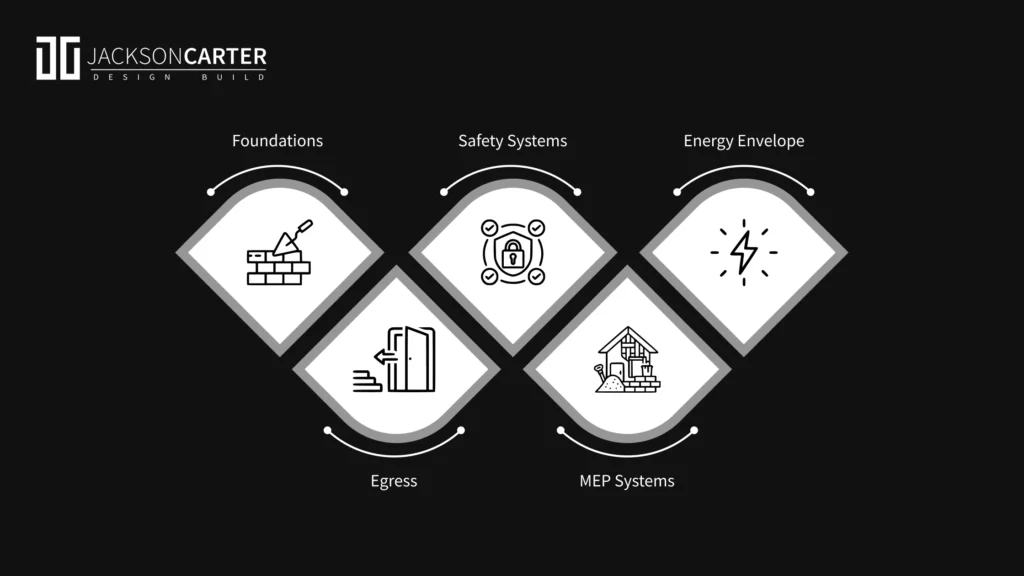
Once zoning establishes what you can build, the building code dictates how it’s built.
- Foundations: Must extend below the frost line (~42″) and meet soil load requirements. Retaining walls over four feet require engineered drawings.
- Egress: Bedrooms and basements require egress windows with minimum clear openings. Stair geometry (tread depth, riser height) is strictly enforced.
- Safety Systems: Interconnected smoke and CO alarms are required on each floor and near bedrooms.
- MEP Systems: HVAC systems must meet IECC efficiency requirements. Electrical load calculations are mandatory for panel sizing. Plumbing venting and trap configurations are closely inspected.
- Energy Envelope: Minimum R-values for insulation and U-values for windows must be met to pass inspections.
Each of these details requires approval during staged inspections, foundation, framing, mechanical rough-in, insulation, and final. Missing one inspection can stall your entire project.
Common Mistakes Homeowners Make
Even detail-oriented homeowners can get tripped up by Lake Forest’s requirements. The most common pitfalls include:
- Designing before confirming zoning: Leads to footprints that must be redrawn.
- Incomplete permit applications: Missing site plans or contractor details add weeks to reviews.
- Hiring unlicensed trades: Lake Forest requires licensed contractors for mechanical, electrical, and plumbing work.
- Underestimating stormwater requirements: Oversized driveways or patios can’t move forward without drainage solutions.
- Skipping final inspections: Without them, a Certificate of Occupancy will not be issued.
How to Keep Your Project on Track
A smoother path through Lake Forest’s codes starts with preparation:
- Check zoning first: Confirm setbacks, overlays, and lot coverage limits before sketching floor plans.
- Meet with the city early: Pre-application meetings with the Building & Zoning Division help spot red flags.
- Build inspections into the timeline: Treat them as milestones, not hurdles.
- Align design with guidelines: Early attention to the Residential Design Guidelines reduces pushback from review boards.
- Use licensed professionals: Compare design build firms and general contractors. Licensed professionals know what inspectors look for and how to avoid rejections.
Experience Custom Home Excellence in Lake Forest with Jackson Carter Design Build
Managing permits, inspections, and code compliance in Lake Forest can feel overwhelming. The city enforces strict regulations to protect safety and preserve neighborhood character, and while that’s good for long-term value, it adds layers of complexity to every custom home project.
That’s where a design-build partner makes all the difference. Jackson Carter Design Build streamlines the entire process by keeping design and construction under one roof. Instead of juggling separate architects, contractors, and inspectors, you work with one accountable team that ensures every stage clears review the first time.
Here’s what you can expect when working with JCDB:
- Code-Compliant Design From the Start – Architectural plans are created with Lake Forest’s zoning and building rules in mind, reducing the risk of redesigns.
- Accurate Permits & Documentation – Applications are complete, detailed, and followed up with the city until approval.
- Licensed Professionals on Every Trade – Electrical, plumbing, HVAC, and structural work are handled by qualified, code-savvy contractors.
- Seamless Inspection Coordination – Every required inspection is scheduled and managed to keep your project on track.
- Transparent Communication – Weekly updates give you full visibility into progress and decisions.
Ready to design and build your dream home in Lake Forest? Connect with Jackson Carter Design Build and take the first step toward a stunning, secure, and fully compliant custom home.
FAQs
- How long does it typically take to get building permits approved in Lake Forest?
Permit review timelines in Lake Forest vary based on project complexity. A straightforward custom home submittal can take 4–6 weeks, while projects requiring zoning variances, stormwater reviews, or design board input may stretch into several months. Submitting complete and accurate documentation is the best way to keep approvals on schedule. - Can I request a variance if my design doesn’t meet setback or height rules?
Yes, variances can be requested through the Zoning Board of Appeals. However, they are only granted when homeowners can demonstrate a clear hardship, not simply a design preference. Approval rates are low without strong justification, so it’s best to design within zoning parameters from the start. - Are there special rules for homes near Lake Michigan bluffs and ravines?
Yes. Properties near bluffs or ravines fall under Lake Forest’s overlay districts, which impose stricter requirements for erosion control, drainage, and slope stability. These lots often require additional engineering, foundation design, and review, which can add time and cost to a project. - What impact do building codes have on resale value?
Homes built without permits or outside code compliance often face challenges during resale. Buyers’ inspectors and lenders will flag noncompliant work, which can delay or even derail a closing. By contrast, a home with documented compliance and final inspections tends to command higher resale value and greater buyer confidence. - How much should I budget for permits and inspections in Lake Forest?
Permit costs depend on project size and scope. Lake Forest charges for building, plumbing, mechanical, and electrical permits separately, along with plan review fees. Homeowners should budget several thousand dollars for permits and inspections on a custom home, in addition to construction costs. Factoring these expenses in early prevents surprises later.